
Managing Humidity in Older Homes — And Why Mold Is Still Fixable

If you live in an older home, you may feel like you’re fighting a losing battle with condensation, drafty windows, or persistent humidity. Many homeowners assume:
“My windows are too old.”
“This house just traps moisture.”
“Until I can afford major renovations, mold is inevitable.”
That simply isn’t true.
While older homes can present moisture challenges, there are practical, affordable ways to manage humidity — and mold can absolutely be addressed once moisture is controlled.
Let’s break it down.
Why Humidity Control Matters
Mold requires three things to grow:
A food source (wood, drywall, dust, paper)
The right temperature
Moisture
You can’t realistically remove food sources or temperature from a home. But you can control moisture.
When indoor relative humidity consistently rises above 50–60%, condensation increases — especially on older windows, exterior walls, and poorly insulated areas. That repeated moisture exposure allows mold to colonize surfaces and spread spores throughout the home.
Controlling humidity isn’t just about comfort. It’s about:
Protecting structural materials
Preventing hidden wall damage
Reducing airborne mold spores
Protecting respiratory health
Preventing long-term remediation costs
Practical Ways to Manage Humidity (Without Replacing All Your Windows)
New windows are helpful — but they are not the only solution. If full replacement isn’t financially realistic right now, here are effective lower-cost strategies:
1. Monitor Humidity First
You cannot manage what you don’t measure.
Purchase a simple digital hygrometer (often under $30).Aim to maintain indoor humidity between:
35–45% in winter
40–50% in summer
Tracking your numbers alone can change behavior and improve outcomes.
2. Use Dehumidifiers Strategically
A quality dehumidifier can dramatically reduce indoor moisture levels.
Tips:
Place in basement or the most humid area
Keep doors open for better air circulation
Clean filters regularly
Run continuously during damp seasons
For many older homes, a dehumidifier is the single most impactful investment.
3. Improve Air Circulation
Stagnant air increases localized humidity.
Run bathroom fans during and 20 minutes after showers
Always use kitchen exhaust fans when cooking
Use ceiling fans on low settings in winter
Keep interior doors open when possible
Even small improvements in air movement reduce condensation buildup.
4. Window Condensation Management
Older windows are often the first place condensation appears.
You can:
Install plastic window insulation kits in winter
Use thermal curtains (open them during the day to allow drying)
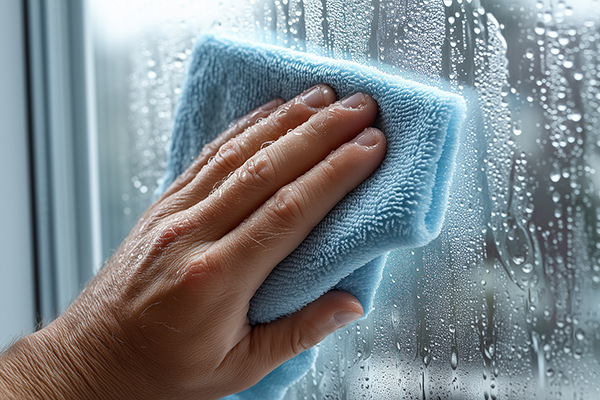
Wipe condensation regularly
Ensure blinds are not trapping moisture against glass
Condensation left sitting repeatedly becomes a mold trigger.
5. Check Drainage Outside
Sometimes interior humidity problems are worsened by exterior moisture.
Ensure:
Gutters are clear
Downspouts direct water away from foundation
Soil slopes away from the home
Crawlspaces are dry and properly ventilated
Managing water outside reduces moisture pressure inside.
6. Address Small Leaks Immediately
Older homes often have minor plumbing drips that go unnoticed.
Even a slow leak:
Increases localized humidity
Saturates subfloor materials
Creates hidden mold colonies
Small repairs today prevent major remediation later.
Don’t Be Overwhelmed
One of the most damaging beliefs homeowners carry is:
“My house is old. Mold is just part of it.”
That mindset leads to inaction.
Yes — older homes may have:
Less insulation
Drafty windows
More porous materials
But mold growth is still driven by moisture imbalance. And moisture imbalance can be improved.
You do not need a full renovation to make meaningful progress.
Why Dealing With Mold Is Important
Ignoring mold doesn’t make it harmless.
Even low-level, chronic mold exposure can contribute to:
Musty odors
Irritated sinuses
Chronic coughing
Fatigue
Headaches
Aggravation of asthma
For sensitized or immunocompromised individuals, the effects can be more significant.
Beyond health, untreated mold:
Damages materials
Reduces property value
Spreads through HVAC systems
Becomes more expensive over time
The longer it’s left, the larger and more embedded it becomes.
The Good News: Mold Can Be Destroyed
Here’s what many homeowners don’t realize:
Even in older homes with imperfections, once moisture is managed, mold contamination can be effectively addressed.
You do not have to tear down your home.
You do not have to move.
You do not have to live with it.
When humidity is brought under control and active water sources are addressed, comprehensive biodecontamination can:
Destroy mold spores
Reduce mold toxins
Eliminate bacteria
Reset indoor air quality
Bring spore levels to below outdoor air levels
That creates a healthier baseline — even in an older home.
A Fresh Start Is Possible
Older homes have character, warmth, and history. They may require a little more moisture awareness — but they are not doomed to mold.
Start with:
Monitoring humidity
Improving ventilation
Addressing drainage
Fixing small leaks
Then, if mold has already taken hold, contact us. We can give your home — and your family — a fresh start.
Healthy indoor air is not reserved for brand-new homes. It’s achievable — even in older ones.


Comments